How to Create a Daily Routine for Your Cat: A Veterinarian’s Guide to Structure, Behavior, and Feline Health
In veterinary practice, cats are often described as independent and low-maintenance animals. While this is partly true, it leads many owners to underestimate how strongly cats depend on predictable daily structure.
What we consistently observe in clinical work is that indoor cats without a routine are more prone to weight gain, stress behaviors, and subtle changes in urinary or digestive health. Unlike dogs, cats do not ask for structure — but they benefit from it significantly.
Many of these principles also apply across species and daily care routines (see our Complete Daily Pet Care Guide for Dogs and Cats).
A daily routine for a cat is not about control. It is about supporting natural feline behavior in a stable and predictable environment.
Why a Daily Routine for Cats Is Important for Health and Behavior
Cats are creatures of habit, even if they appear independent. Their internal sense of security is closely tied to predictable patterns of feeding, activity, and rest.
In clinical practice, cats with stable routines tend to show fewer behavioral issues and more stable body weight over time.
A consistent routine helps:
- Reduce stress-related behaviors
- Prevent obesity and overeating
- Stabilize litter box habits
- Support normal sleep–wake cycles
- Improve owner–cat interaction quality
One of the most common patterns we see in veterinary consultations is a cat that develops nighttime activity or food-seeking behavior when daily structure is inconsistent.
How to Create a Daily Routine for Your Cat Step by Step
A healthy cat routine is built around three main pillars: feeding, stimulation, and rest.
Cats do not need rigid schedules, but they respond extremely well to repetition.
In practice, most indoor cats thrive with two to three predictable feeding moments, short play sessions, and long uninterrupted rest periods.
What matters most is not precision timing, but consistency of sequence.
How to Create a Daily Routine for a Kitten
Kittens require significantly more structure than adult cats.
Their energy levels are high, and their learning capacity is strongly influenced by repetition.
A typical kitten routine includes:
- Frequent small meals
- Multiple short play sessions
- Regular litter box access
- Several nap periods throughout the day
In veterinary behavior work, we often emphasize that kittens should not be overstimulated for long periods. Short and frequent interactions are more effective for both development and behavioral stability.
How to Create a Daily Routine for an Adult Indoor Cat
Adult indoor cats benefit most from predictable feeding and play cycles.
Most healthy cats do well with two main meals per day, combined with short interactive play sessions.
In practice, we often see that behavioral problems such as early morning waking or nighttime vocalization are strongly linked to irregular feeding or inconsistent stimulation during the day.
A long-tail query often searched by owners is “what is the best daily routine for an indoor cat at home?” — clinically, the answer is always the same: stability reduces behavioral noise.
How to Create a Daily Routine for a Senior Cat
Senior cats require a more flexible approach, but routine becomes even more important with age.
Older cats are more sensitive to environmental and schedule changes. Even small disruptions can lead to confusion, decreased appetite, or litter box avoidance.
In practice, we frequently observe early cognitive changes in senior cats presenting as altered sleep patterns or increased nighttime vocalization.
A senior routine should prioritize comfort, easy access to resources, and gentle, predictable activity.
Cat Feeding Schedule as the Core of Daily Routine
Feeding is the strongest anchor in a cat’s daily structure.
Cats strongly associate time and environment with food availability, and inconsistencies often lead to anxiety or food-driven behavior changes.
Most adult cats do well with two meals per day, although some benefit from smaller, more frequent portions depending on health status and body condition.
In clinical practice, we often see that controlled feeding schedules significantly improve weight management in indoor cats.
How Much Play Does a Cat Need in a Daily Routine?
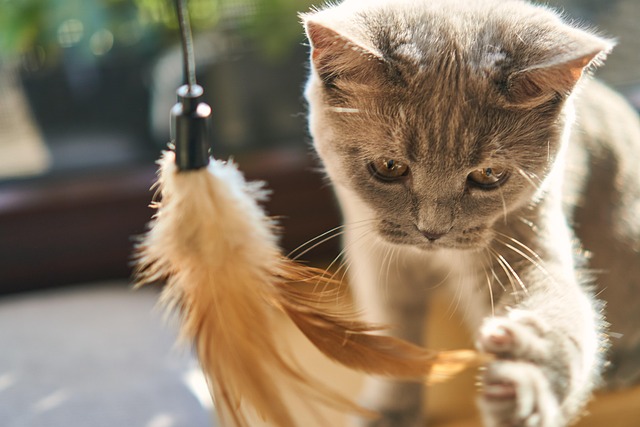
Play is not optional for indoor cats — it is a substitute for natural hunting behavior.
Even short sessions are biologically meaningful.
Most cats benefit from:
- Short interactive play sessions
- Wand toys or chase-based games
- Puzzle feeders for mental stimulation
What we consistently observe is that cats respond better to multiple short bursts of activity than to one long play session.
This reflects their natural hunting pattern: short, intense activity followed by rest.
Example of a Balanced Daily Routine for Cats
A typical healthy indoor cat routine may look like this:
- Morning feeding followed by short play session
- Midday rest with optional environmental enrichment
- Evening feeding with interactive play
- Long uninterrupted nighttime rest period
Within a few days of consistency, most cats begin to anticipate these patterns and adjust behavior accordingly.
Common Mistakes in Creating a Cat Daily Routine
In veterinary consultations, we often see the same patterns of routine disruption:
- Feeding at random times each day
- Long periods of inactivity without stimulation
- Overstimulation in the evening followed by sudden silence
- Frequent changes in schedule without transition
- Ignoring rest cycles and forcing interaction
One of the most underestimated issues is excessive human-driven interaction without allowing the cat sufficient downtime. Cats require more rest than most owners expect.
How Long Does It Take a Cat to Adapt to a New Routine?
Most cats adjust within 1 to 3 weeks depending on age and personality.
Younger cats adapt faster, while senior cats may require more time due to established behavioral patterns.
In clinical observation, consistency during the transition phase is the most important factor for success.
Signs That Your Cat’s Routine Is Working Well
A stable routine usually results in:
- Predictable eating behavior
- Stable litter box habits
- Reduced nighttime activity
- More relaxed interaction with owners
- Stable body weight over time
Behavioral calmness is often the earliest visible improvement.
Can a Poor Routine Affect a Cat’s Health?
Yes, and the effects are often subtle at first.
Irregular routines can contribute to:
- Stress-related urinary issues
- Overeating and obesity
- Increased nighttime activity
- Behavioral anxiety or withdrawal
- Digestive irregularities
Proper hydration is also a key factor in urinary health (see our Hydration in Cats guide).
In practice, many cats labeled as “problematic” show significant improvement once a structured routine is introduced without any medical intervention.
Final Veterinary Perspective
A daily routine for cats is not about strict control or rigid scheduling.
It is about creating predictability that supports natural feline behavior. When feeding, play, and rest follow a consistent pattern, cats show better emotional stability and improved physical health over time.
Regular preventive care also plays a key role in long-term stability (read more in our Vet Check Schedule article).
From a veterinary point of view, the most important principle is simple: cats do not need complex schedules, but they absolutely benefit from consistent ones.
Frequently Asked Questions
How do I create a daily routine for my cat?
Start with consistent feeding times, add short daily play sessions, and maintain a predictable rest environment. Cats respond best to repetition.
What is a good daily routine for an indoor cat?
A good routine includes two meals per day, short interactive play sessions, and long rest periods in a stable environment.
How long does it take a cat to adjust to a new routine?
Most cats adapt within 1–3 weeks if the routine remains consistent.
Do cats need strict schedules every day?
No. Cats do not need exact timing, but they do need consistent patterns in feeding, activity, and rest.
Can changing routine affect a cat’s behavior?
Yes. Sudden changes can lead to stress, appetite changes, and behavioral issues, especially in sensitive cats.